
Sodium-Ion Batteries: Classification and Safe Transport
Sodium-ion cells now have their own UN numbers, their own special provisions and their own air packing instructions. This regulatory guide explains how UN 3551, UN 3552 and UN 3558 work across road, rail, sea and air, what the 0 V exemption really permits, and how to handle sodium-ion packs that arrive mixed in with lithium.
1. Sodium-Ion Batteries Are Entering the Logistics Chain
A sodium-ion battery works on the same rocking-chair principle as a lithium-ion battery: charge carriers shuttle between a cathode and an anode through a liquid electrolyte. The difference is the carrier. Sodium ions replace lithium ions, the anode is typically hard carbon rather than graphite, and the cathode is usually a layered sodium transition-metal oxide, a Prussian blue analogue or a polyanionic compound. Both current collectors can be aluminium, which matters for transport, as Section 3 explains.
Sodium is abundant, many designs avoid lithium, cobalt and nickel, and cells tolerate cold well. Energy density is lower than mainstream lithium-ion, so early volume markets are those where cost matters more than mass:
- Stationary storage. Grid-scale and commercial energy storage, where weight is rarely the constraint.
- Low-cost and urban EVs. Entry-level cars, two- and three-wheelers and hybrid sodium/lithium packs.
- Mixed collection streams. End-of-life sodium-ion cells arrive in the same collection containers and recycling intake as lithium-ion cells, often without a chemistry label.
Until recently sodium-ion cells had no dedicated dangerous goods entry. That has now changed across every mode. On the product side, the EU Battery Regulation is chemistry-neutral, so its due diligence, labelling, extended producer responsibility and end-of-life provisions apply to sodium-ion batteries exactly as they do to lithium. Shippers, collectors and recyclers who have mapped their Regulation (EU) 2023/1542 obligations for logistics should extend that mapping to sodium-ion stock rather than treating it as out of scope.
Key principle: a sodium-ion battery is not a "safe lithium battery". It is a Class 9 dangerous good with its own UN numbers, its own test and documentation requirements, and a flammable organic electrolyte. Lower cost and a different carrier ion do not change the basic transport discipline.
2. Classification: UN 3551, UN 3552 and UN 3558
The 23rd revised edition of the UN Recommendations on the Transport of Dangerous Goods (Model Regulations) created dedicated entries for sodium-ion batteries with an organic electrolyte. Those entries have been carried into ADR 2025 and RID 2025 for road and rail, into Amendment 42-24 of the IMDG Code for sea, and into the 66th edition (2025) of the IATA Dangerous Goods Regulations for air. All three entries are Class 9.
- UN 3551 SODIUM ION BATTERIES with organic electrolyte. Cells and batteries shipped on their own. The entry covers sodium-ion chemistries in which neither electrode contains metallic sodium.
- UN 3552 SODIUM ION BATTERIES CONTAINED IN EQUIPMENT or SODIUM ION BATTERIES PACKED WITH EQUIPMENT, with organic electrolyte. The equivalent of UN 3481 for lithium-ion.
- UN 3558 VEHICLE, SODIUM ION BATTERY POWERED. Created alongside UN 3556 and UN 3557, replacing UN 3171 for these vehicles. In ADR it uses the new packing instruction P 912, and SP 404 exempts vehicles whose batteries contain no electrical energy, with the short circuit verifiable.
Special provision SP 401 draws the boundary between the sodium entries. Sodium-ion cells with an organic electrolyte belong under UN 3551 or UN 3552; batteries containing metallic sodium or sodium alloy remain under UN 3292; and sodium batteries with an aqueous alkali electrolyte are assigned to the wet-battery entries.
| Feature | UN 3480 / UN 3481 (lithium-ion) |
UN 3551 / UN 3552 (sodium-ion) |
Status |
|---|---|---|---|
| Class | Class 9 | Class 9 | Same |
| Design-type testing | UN Manual of Tests and Criteria 38.3, test summary | Basic requirements of ADR 2.2.9.1.7 extended to sodium-ion, including the test summary | Same principle |
| Package mark | Lithium battery mark | Renamed "battery mark", now applies to both | Renamed |
| Damaged or defective | SP 376, P 908 / LP 904, P 911 / LP 906 | SP 376 and the same packing instructions, reading "sodium-ion" for "lithium-ion" | Extended |
| Disposal and recycling | SP 377, P 909 | SP 377, P 909 | Extended |
| Zero-energy exemption | None | SP 400 (short-circuited, no electrical energy) | New |
| Air packing instructions | PI 965, 966, 967 | PI 976, 977, 978 | Parallel set |
3. Special Provisions: SP 400, SP 401 and SP 677
Three new ADR 2025 special provisions concern the sodium-ion entries. Alongside them, a list of existing lithium provisions was extended to UN 3551 and UN 3552, among them SP 230, SP 310, SP 348, SP 376, SP 377, SP 636 and SP 670.
3.1 SP 400: the zero-energy exemption
SP 400 provides that sodium-ion cells and batteries which have been short-circuited so that they contain no electrical energy, with the short circuit easily verifiable (for example a conductive bar across the terminals), are not subject to the other provisions of ADR, provided its conditions are met. In outline those conditions require compliance with the basic construction and test requirements for sodium-ion batteries, the battery mark on the package, a package able to withstand a 1.2 m drop test, protection of batteries installed in equipment, and limits on the quantity of dangerous substances in the cell.
The technical basis is the anode current collector. In a lithium-ion cell the anode collector is copper, and deep discharge towards zero volts drives copper dissolution that can later re-plate as dendrites and internal shorts. Lithium-ion cells are therefore never stored or shipped at 0 V as a safety measure. Sodium-ion cells use aluminium on both electrodes, so they can be discharged to 0 V and held there without that degradation mechanism.
The limits of 0 V transport. SP 400 removes the electrical energy, not the chemistry. The cell still contains a flammable organic electrolyte and a fluorinated salt, and it still burns if exposed to external fire. The short circuit must be verifiable at handover: a visible conductive link, not a note on a delivery document. A damaged cell does not qualify. If you cannot see the bar, assume the cell is live.
3.2 SP 401 and SP 677
SP 401, covered in Section 2, assigns the different sodium battery families to UN 2795, UN 3292, UN 3551 or UN 3552. SP 677 applies to UN 3090, UN 3091, UN 3480 and UN 3481 as well as the new UN 3551 and UN 3552. It assigns damaged or defective cells and batteries carried under SP 376 to transport category 0 and requires that status to be indicated in the transport document.
Because SP 376 and SP 377 now explicitly reach sodium-ion, the packaging tiers that shippers already know apply in full. ADR 2025 extends P 903 and LP 903, P 908 and LP 904, P 909, P 910 and LP 905, and the top tier of UN P911 and LP906 packaging requirements to UN 3551 and UN 3552, reading "sodium-ion" in place of "lithium-ion". A sodium-ion pack that is liable to react dangerously, produce a flame or show a dangerous evolution of heat therefore needs the same class of fire-tested packaging as its lithium equivalent.
4. Safety Profile: Thermal Runaway and Gas Compared with Lithium-Ion
Sodium-ion cells can undergo thermal runaway. The mechanism follows the same broad sequence as in lithium-ion: breakdown of the passivation layer on the anode, reaction between the anode and the electrolyte, separator failure, internal short circuit, cathode decomposition and venting. Understanding how a single-cell failure cascades through a module is just as relevant for sodium-ion packs as for lithium ones, because propagation, not the first cell, decides the outcome.
Published research generally describes sodium-ion cells as comparable to, or somewhat less severe than, many lithium-ion chemistries in thermal abuse tests, with the result depending heavily on the cathode material, the state of charge and the cell format. That is a qualitative observation, not a safety margin, and no transport regulation treats it as one.
The gas question deserves particular attention. Because NaPF₆ is the common salt, the same pathway that makes hydrogen fluoride exposure risks central to lithium-ion incidents applies to sodium-ion incidents. Vent gas also contains hydrogen, carbon monoxide and hydrocarbons, so the enclosed-space hazard is of the same kind: a difference of degree, not of category.
Do not downgrade emergency response. A crew told "these are sodium batteries" may assume a lower hazard. Emergency information for sodium-ion consignments should state explicitly that the cells contain a flammable electrolyte, that thermal runaway is possible and that hydrogen fluoride may be released.
5. Air, Sea, Road and Rail: How the Modes Compare
All four modal regimes now carry UN 3551 and UN 3552, but the controls on state of charge, aircraft type and damaged batteries are not identical. Shippers moving sodium-ion stock internationally should check the IATA DGR and IMDG Code requirements together with ADR and RID before routing a consignment.
| Mode | Regime | Key instruments for UN 3551 / 3552 | Damaged or defective |
|---|---|---|---|
| Road | ADR 2025 | SP 400, SP 401, SP 677; P 903 / LP 903; SP 376 and SP 377 extended | Permitted under SP 376 and P 908 / LP 904 or P 911 / LP 906 |
| Rail | RID 2025 | Parallel to ADR, as a harmonised 2025 amendment | Parallel to ADR |
| Sea | IMDG Code, Amendment 42-24 | Class 9 entries UN 3551 and UN 3552; mandatory from 1 January 2026 | Check current edition with your DGSA |
| Air | IATA DGR, 66th edition (2025) | PI 976 (UN 3551), PI 977 (UN 3552 packed with equipment), PI 978 (UN 3552 contained in equipment) | Forbidden (A154 extended to sodium-ion) |
5.1 Air: the 30% state of charge rule
The three IATA packing instructions for sodium-ion batteries with organic electrolyte generally mirror their lithium-ion counterparts. For UN 3551 under PI 976, cells and batteries must be offered at a state of charge not exceeding 30% of rated capacity. A higher state of charge is possible only with approval under special provision A331. As with stand-alone lithium-ion cells under PI 965, stand-alone sodium-ion cells and batteries under PI 976 cannot be carried on passenger aircraft. A154, extended to sodium-ion in the 66th edition, forbids batteries identified as damaged or defective for safety reasons.
On the road, SP 400 lets a verifiably short-circuited sodium-ion battery move outside most of ADR. In the air, the stand-alone regime rests on a 30% cap and cargo-only carriage; the 0 V provision in the DGR, A231, covers UN 3558 vehicles, so do not assume a road exemption for cells has an air equivalent. The detailed logic of where sea and air battery rules diverge applies to sodium-ion in the same way it applies to lithium.
In ADR the lithium battery mark has become the "battery mark" and covers sodium-ion batteries. IATA made the same change, and the Class 9 lithium battery label in the DGR is now the lithium battery or sodium ion battery label. The test summary obligation under 2.2.9.1.7 also extends to sodium-ion, so manufacturers and distributors must make it available.
6. Damaged, Defective and End-of-Life Sodium-Ion Batteries
The extension of SP 376 to UN 3551 and UN 3552 is the single most consequential change for reverse logistics. A sodium-ion cell or battery that is damaged or defective, or no longer conforms to its tested type, is classified using exactly the same logic as a lithium-ion one. Shippers who already run the SP 376 yellow and red assessment should apply it unchanged to sodium-ion stock.
- Damaged or defective, not liable to dangerous reaction. P 908 or LP 904, with transport category 0 and the transport document indication required by SP 677.
- Liable to rapidly disassemble, react dangerously, produce a flame or a dangerous evolution of heat, or emit toxic, corrosive or flammable gases. P 911 or LP 906, using packaging whose performance has been demonstrated in a thermal runaway test.
- Collected for disposal or recycling. SP 377 and P 909, with the collection-point provisions in SP 636 and the household-equipment provisions in SP 670 now also reaching sodium-ion batteries.
- By air. Damaged or defective sodium-ion batteries are forbidden under A154, as lithium batteries are.
It is worth understanding how LP906 fire-test certification works before relying on any packaging for a damaged sodium-ion pack. The approval covers a specific design and the contents it describes, and that scope determines whether a consignment is covered. Where a certificate was written around lithium-ion contents, confirm with the packaging manufacturer and your DGSA how it applies to UN 3551 and UN 3552.
SP 400 does not rescue a damaged battery. The zero-energy exemption assumes an intact cell with a verifiable short circuit. A swollen, punctured, leaking or heat-affected sodium-ion battery is an SP 376 case, regardless of its measured voltage.
7. Mixed Lithium and Sodium Streams in Collection and Recycling
The most realistic sodium-ion risk for the next decade is not a clean pallet of new cells from a known manufacturer. It is a collection container, a workshop return bin or a recycler's intake bay in which sodium-ion and lithium-ion batteries arrive together, often without readable chemistry markings. A prismatic sodium-ion cell and an LFP cell can look identical, and hybrid packs combine both.
Misidentification cuts both ways. A lithium-ion pack wrongly assumed to be sodium-ion might be shipped at 0 V under a misapplied SP 400, discharged in a way that damages it, or described with the wrong UN number. The reverse error is a documentation issue, not a safety failure. The asymmetry points to one operational rule: where chemistry cannot be confirmed from the label, the test summary or the manufacturer's documentation, handle the item as the more hazardous of the plausible options, which in practice means as lithium-ion under the applicable lithium entry and provisions, and seek advice from your DGSA on the correct declaration.
Operators building reverse logistics for recycling streams should therefore design for mixed contents from the outset:
- Record chemistry at collection and carry that record with the item.
- Segregate items of unknown chemistry, and apply SP 376 assessment to anything showing damage.
- Never short-circuit or deep-discharge a battery to 0 V unless its sodium-ion chemistry is confirmed.
- Use containment that does not depend on knowing the chemistry, so that a misidentified item is still held in packaging suited to the worst case.
The same logic applies when mixed batteries are held between collection and onward shipment. Interim holding areas need the controls described in warehouse and yard storage practice: separation, detection, thermal isolation and a plan for gas. A sodium-ion label on a container does not justify a lighter storage regime.
This is where universal containment helps. BUNCKER® states that its system covers all lithium batteries, including sodium batteries and mixed loads. The side-loading Model SDR universal system is described by BUNCKER® as quickly and safely securing all forms and sizes of lithium batteries, including sodium batteries. Where chemistry cannot be guaranteed at intake, one containment approach suited to both removes the need to sort before the item is safe. When choosing a unit, sizing containment by kWh rating remains the correct method, whatever the chemistry.
BUNCKER® units are UN LP906 certified and suitable for road (ADR), sea (IMDG) and rail (RID) transport as well as indoor and outdoor storage. For consignments declared as UN 3551 or UN 3552, confirm the certificate scope for your specific sodium-ion contents with the BUNCKER® team and your DGSA before shipment.
BUNCKER® Pro Line Heavy: Six Models from 45.8 to 200 kWh
SDR 45.8 kWh (side loading), S 50, M 90, L 90, XL 100 and XXL 200 kWh. Patented bell jar architecture with the Fibercon Altilium® CP Blanket (FACB) to neutralise hydrogen fluoride, no sand, vermiculite or other filler materials, and an outer surface that stays below 100 °C during thermal runaway. UN LP906 certified, for ADR, IMDG and RID transport and for indoor and outdoor storage. Made in the Netherlands by VDL.
View the range →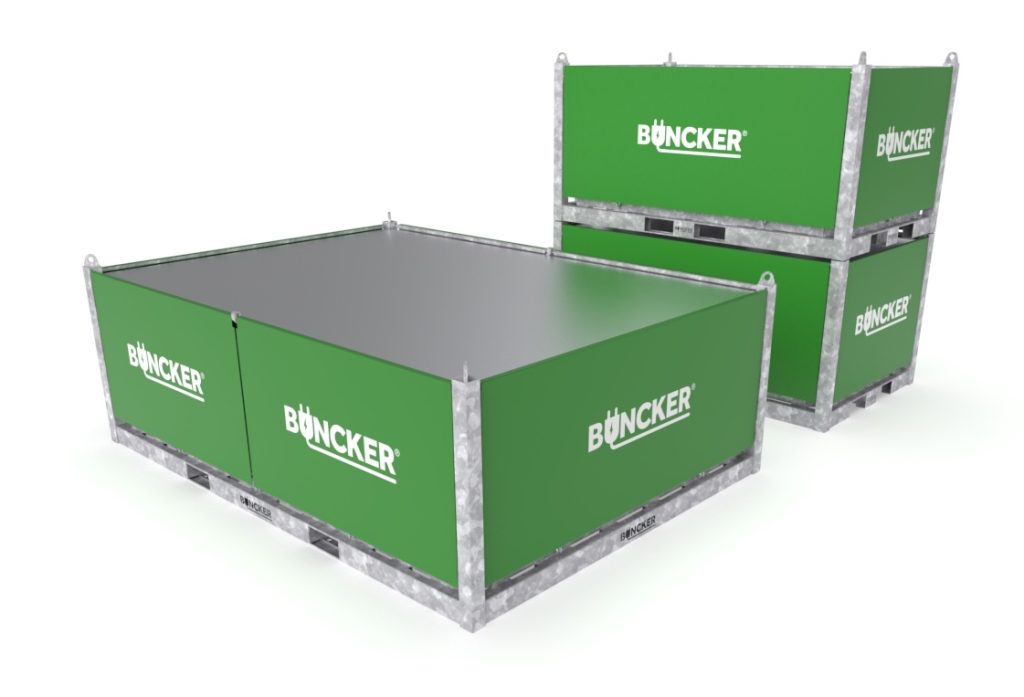
8. Shipper Checklist for Sodium-Ion Consignments
Before offering any sodium-ion consignment for transport, work through the following checks. Each one maps to a provision discussed above.
- ✅ Confirm the chemistry from the manufacturer's documentation and test summary, not from appearance or voltage.
- ✅ Apply SP 401: organic electrolyte sodium-ion to UN 3551 or UN 3552; metallic sodium or sodium alloy to UN 3292; aqueous alkali electrolyte to the wet-battery entry.
- ✅ Choose UN 3551 for cells and batteries alone, UN 3552 for batteries in or packed with equipment, UN 3558 for sodium-ion powered vehicles.
- ✅ Use the battery mark, and from the relevant date the SP 348 watt-hour marking on batteries manufactured after 31 December 2025.
- ✅ Before relying on SP 400, confirm the battery is intact, holds no electrical energy and carries a visible, verifiable short circuit, and that every SP 400 condition is met.
- ✅ For air, apply PI 976, 977 or 978, keep UN 3551 at or below 30% state of charge unless approved under A331, and remember that stand-alone cells are cargo aircraft only.
- ✅ Never offer damaged or defective sodium-ion batteries by air.
- ✅ Assess damaged or defective items under SP 376, document transport category 0 under SP 677, and select P 908 / LP 904 or P 911 / LP 906 accordingly.
- ✅ Where chemistry is uncertain in a mixed stream, treat the item as lithium-ion and consult your DGSA on the declaration.
- ✅ Confirm the approval scope of your containment packaging for UN 3551 and UN 3552 contents with the manufacturer.
- ✅ Brief carriers that sodium-ion cells contain flammable electrolyte and may release HF.
Check the current edition. This guide reflects ADR 2025, RID 2025, IMDG Amendment 42-24 and the 66th edition of the IATA DGR. Texts change regularly and operators may apply variations. Always verify the provisions in force on the date of shipment with your Dangerous Goods Safety Adviser.
Frequently Asked Questions
Frequently Asked Questions
Yes. Sodium-ion batteries with an organic electrolyte are Class 9 dangerous goods under UN 3551 (cells and batteries) and UN 3552 (contained in or packed with equipment), with UN 3558 for sodium-ion powered vehicles. On the road, SP 400 exempts batteries verifiably short-circuited to zero energy, under conditions.
Lithium-ion cells use a copper anode current collector that dissolves when the cell is driven to very low voltage, creating a later risk of internal short circuits. Sodium-ion cells can use aluminium on both electrodes, so they tolerate full discharge to 0 V. SP 400 reflects this, but the flammable electrolyte remains.
Yes. ADR 2025 extends SP 376 (damaged or defective batteries) and SP 377 (batteries for disposal or recycling) to UN 3551 and UN 3552, together with packing instructions P 908 / LP 904, P 909 and P 911 / LP 906, reading "sodium-ion" in place of "lithium-ion". SP 677 adds transport category 0 for damaged or defective items.
Yes, under IATA PI 976 (UN 3551), PI 977 (UN 3552 packed with equipment) and PI 978 (UN 3552 contained in equipment). Stand-alone cells and batteries under PI 976 are limited to 30% state of charge unless approved under A331, and cannot travel on passenger aircraft. Damaged or defective sodium-ion batteries are forbidden by air under A154.
They can. Many sodium-ion cells use sodium hexafluorophosphate (NaPF₆) as the conducting salt, which, like LiPF₆ in lithium-ion cells, decomposes during thermal runaway and reacts with moisture to form hydrogen fluoride. Emergency planning should assume HF is present.
Treat them as the more hazardous plausible option, which in practice means lithium-ion. Do not short-circuit them to use SP 400, assess damage under SP 376 and agree the declaration with your DGSA.
BUNCKER® states that its system covers all lithium batteries, including sodium batteries and mixed loads, and that the Model SDR quickly and safely secures all forms and sizes of lithium batteries, including sodium batteries. For consignments declared as UN 3551 or UN 3552, confirm the certificate scope for your specific contents with the BUNCKER® team before shipment.
One Containment Approach for Mixed Battery Streams
BUNCKER® units are UN LP906 certified, with patented HF gas filtration and no filler materials required. Talk to our specialists about sizing the right model for your lithium and sodium-ion flows and confirming certificate scope for your consignments.
One Comment
Comments are closed.