
BATTERY RECYCLING & REVERSE LOGISTICS
Certified Transport of Damaged, Defective & Suspected Lithium Batteries
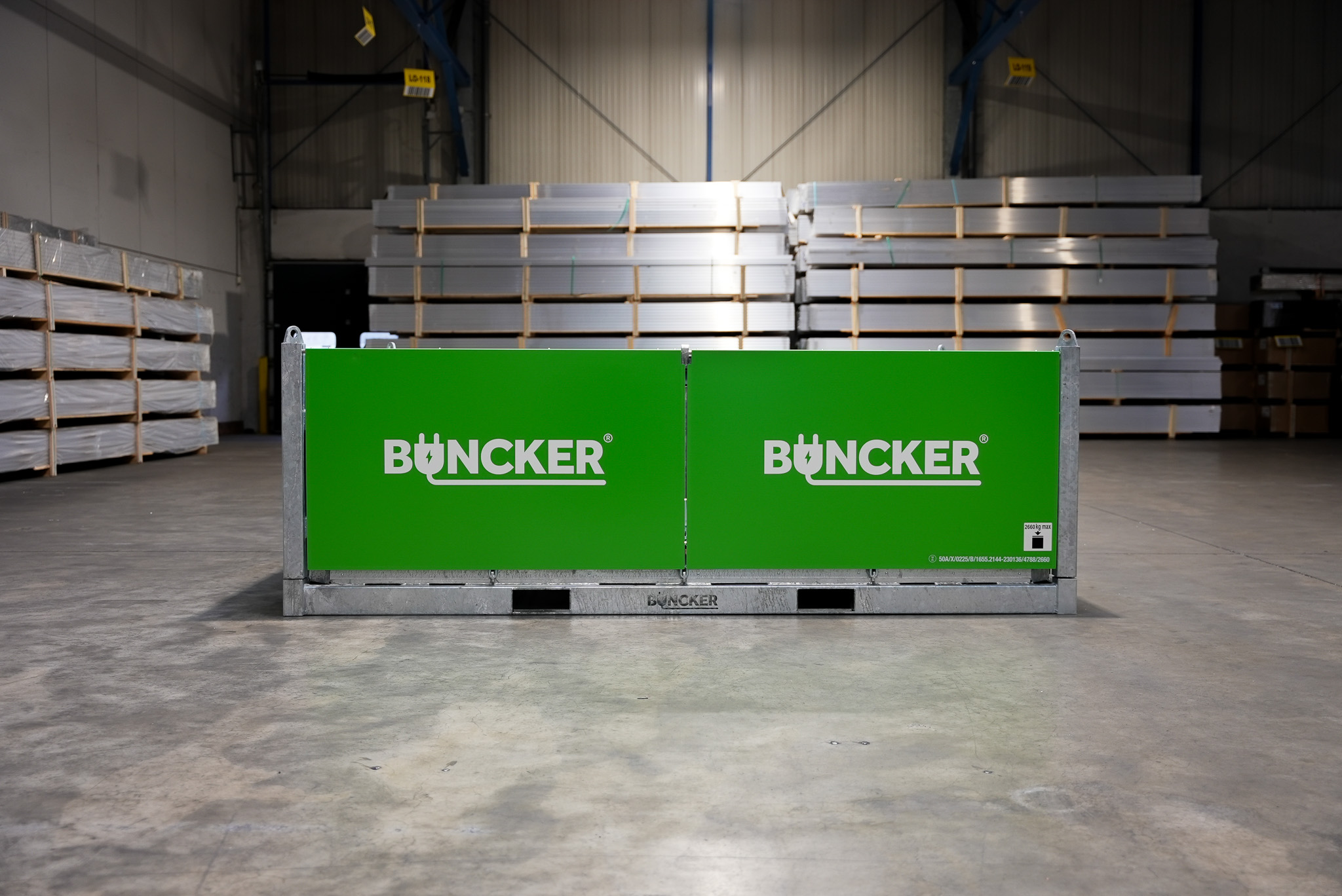
Recyclers handle the most dangerous batteries daily. BUNCKER® is the only UN-certified solution without filler materials for this classification faster operations, lower risk, full compliance.
The Challenge
Recycling Lithium Batteries Means Handling the Most Hazardous Classification
Battery recycling and reverse logistics operations receive batteries in every state — swollen, punctured, partially discharged, water-damaged, thermally compromised. These “non-intact” batteries carry the highest hazard classification and require packaging under UN P908 or UN P911, the most stringent instructions in the dangerous goods framework.
For recyclers running high-throughput operations, the standard solutions are inadequate. Conventional certified containers require vermiculite, sand or other filler materials, adding time, contamination and disposal cost to every single packing operation. In a facility processing hundreds of batteries per day, this compounds into a significant operational burden.
Beyond operational inefficiency, there is a critical safety dimension: thermal runaway during transport releases hydrogen fluoride (HF) gas an acutely toxic substance. Packaging that cannot filter or contain HF gas puts transport workers, drivers and emergency responders at severe risk.
Key Challenges for Recyclers
The Solution
BUNCKER® for Battery Recycling Operations
The only certified solution that eliminates filler materials while providing complete thermal runaway containment and HF gas filtration.
Recommended Models
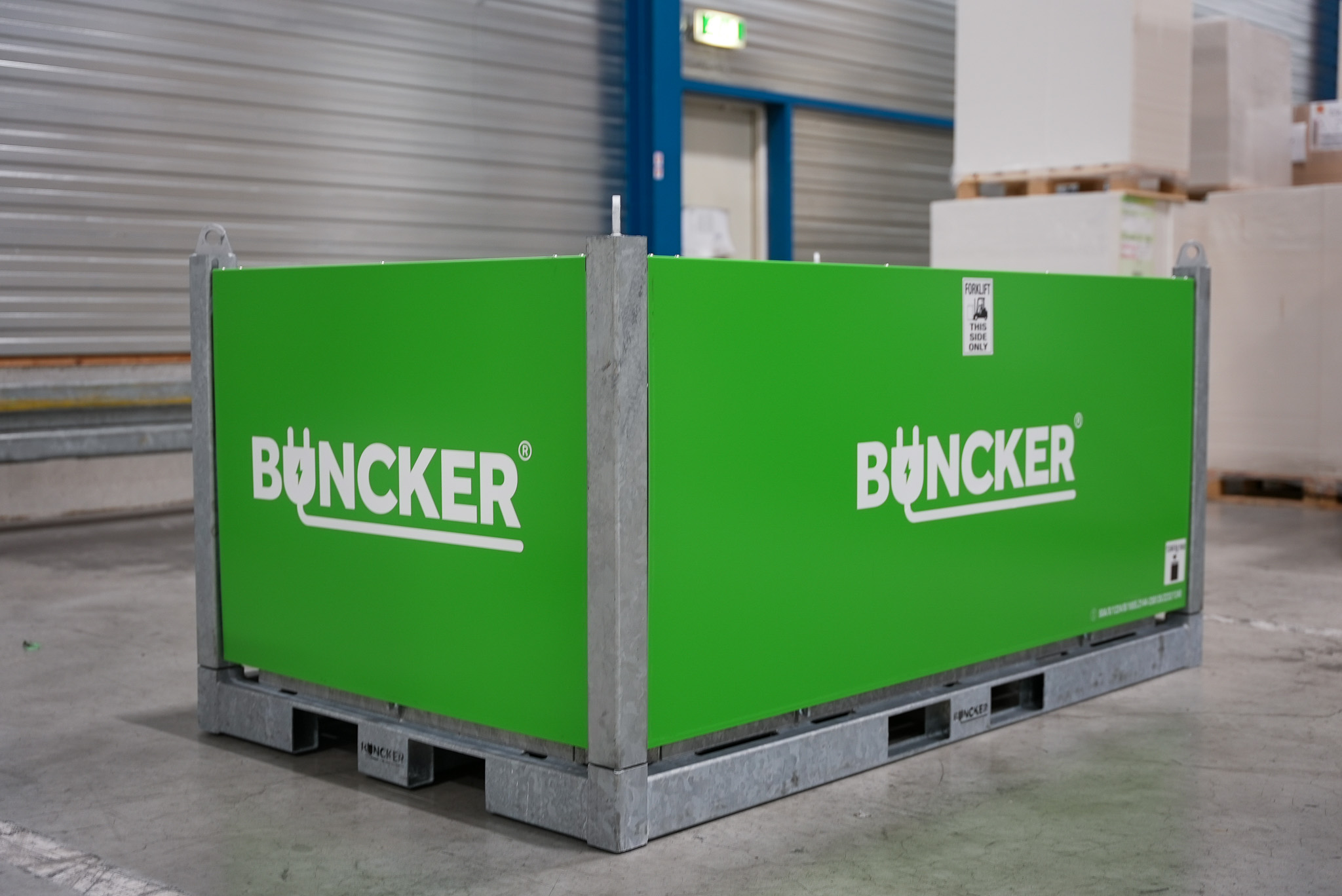
All BUNCKER® Models Are Suitable for Recycling Applications
Choose the model based on the typical battery size you receive. M, L and XL cover the majority of recycling centre requirements.
Recommended
BUNCKER® M
Ideal for e-bike, e-scooter, and small EV battery packs. High throughput at collection centres.
Recommended
BUNCKER® L
The most versatile model for recycling centres handling mixed battery types and sizes.
Recommended
BUNCKER® XL
For large EV battery packs received in a damaged or defective state from OEM recall programmes.
Regulatory Compliance
Certified for the Hardest Batteries to Move
BUNCKER® is certified under all applicable regulatory frameworks for damaged, defective and suspected lithium batteries, including the most restrictive classifications.
Typical Use Case
EV Battery Collection Centre: Step by Step
How a BUNCKER®-equipped recycling centre processes incoming end-of-life and damaged EV batteries from collection to delivery.
- Receive Battery Battery arrives from OEM dealer, consumer drop-off or logistics provider. Each battery is logged with serial number, chemistry and origin.
- Inspect & Assess Visual and electronic assessment determines battery condition: intact, damaged, defective or suspected. State of charge is measured where possible.
- Classify Under ADR Battery is classified per ADR 2026: UN3480, UN3481 or UN3090/3091. Packaging instruction P908 or P911 is assigned based on condition.
- Pack in BUNCKER® Battery is placed in the correctly sized BUNCKER® unit. No filler materials required. The bell jar is sealed and the unit is labelled per ADR requirements.
- Transport Compliant The BUNCKER® unit is transported by road (ADR), sea (IMDG), air (IATA) or rail (RID) fully certified, fully documented, no exceptions.
- Deliver to Recycler Battery arrives at the certified recycling facility. BUNCKER® is unloaded, inspected for reuse, and returned to the collection centre for the next cycle.
Scale your recycling operation safely
BUNCKER® is the solution battery recyclers have been waiting for. No fillers. Full certification. Ready from stock. Let us show you how BUNCKER® transforms your battery collection and transport process.